10 Mistakes to Avoid When Buying a Grinding Machine
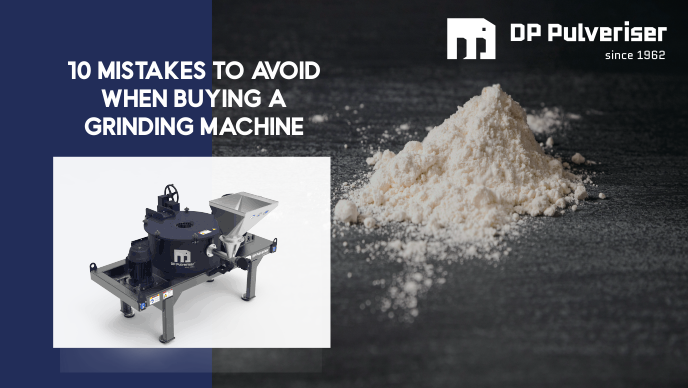
Choosing the right grinding machine is a critical decision for industries involved in size reduction, powder processing, and material handling. A wrong investment can lead to production inefficiencies, high maintenance costs, and inconsistent product quality. Before purchasing a grinding machine, businesses should carefully evaluate their processing needs and machine capabilities. Here are 10 common mistakes to avoid when buying a grinding machine.
1. Not Understanding Your Material
Different materials behave differently during grinding. Spices, minerals, chemicals, plastics, and food products require different grinding technologies. Selecting a machine without considering hardness, moisture content, and heat sensitivity can lead to poor performance.
2. Ignoring Required Particle Size
One of the most common mistakes is not defining the required final particle size. Some applications require coarse powder, while others need ultra-fine micron-level grinding. Choosing the wrong machine may require additional processing stages.
3. Overlooking Production Capacity
Buying a machine without considering current and future production requirements can limit growth. Always evaluate hourly output capacity to ensure the machine supports production expansion.
4. Not Considering Heat Generation
Certain materials like spices, herbs, and food ingredients are heat-sensitive. Machines that generate excessive heat can affect flavor, color, and quality. Selecting the right grinding technology is essential.
5. Choosing Price Over Performance
While cost is an important factor, focusing only on the lowest price often results in higher maintenance and operating costs. A high-quality machine offers better durability, efficiency, and long-term value.
6. Ignoring Maintenance Requirements
Grinding machines operate continuously in demanding environments. If maintenance is complicated or spare parts are difficult to obtain, downtime can increase significantly.
7. Not Checking Energy Efficiency
Energy consumption plays a major role in operational costs. Machines designed for efficient power utilization help reduce long-term operating expenses.