How to choose the right mineral grinding machine based on hardness, fineness and capacity
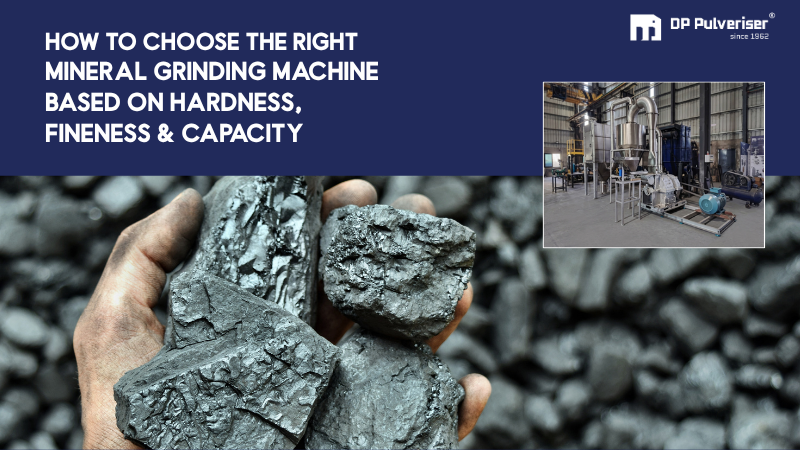
Choosing the right mineral grinding machine depends on the type of mineral, its hardness, required fineness, feed size and production capacity. Different minerals require different grinding technologies to achieve consistent powder quality and efficient processing.
Consider Mineral Hardness
Mineral hardness and abrasiveness are important factors when selecting grinding equipment. Materials such as limestone, bentonite, kaolin and graphite have different grinding characteristics. The machine should be selected according to hardness, abrasiveness, moisture and feed size.
Define the Required Fineness
The required final particle size determines the appropriate grinding technology. For conventional pulverising and size reduction, an Impact Pulveriser can be suitable for applicable minerals. For fine mineral powder with controlled particle size, an Air Classifier Mill (ACM) can combine fine grinding with air classification.
Match the Required Capacity
Mineral grinding machine capacity is generally measured in kg/hr or tonnes/hr. Actual capacity depends on material hardness, feed size, target fineness, moisture, bulk density and operating conditions. A machine should therefore be selected based on the required output at the desired fineness, rather than maximum rated capacity alone.
Select the Right Grinding Technology
Different mineral applications may require different machines:
Impact Pulveriser - For suitable mineral size reduction and pulverising applications.
Air Classifier Mill - For fine grinding and controlled particle size classification.
Contra Pin Mill - For selected fine grinding applications requiring high-speed impact grinding.
Consider Wear and Contamination
Abrasive minerals can cause wear in grinding components. Depending on the application, suitable liners, wear-resistant parts, stainless steel or ceramic contact components may be considered, particularly where product purity is important.
Testing Before Machine Selection
Material testing and grinding trials can help determine achievable fineness, throughput, temperature, particle size distribution and product yield. Testing the actual mineral before purchasing equipment can help identify the appropriate machine configuration and process parameters.
Don't Forget Dust Collection
Fine mineral grinding generates dust, so an effective collection system is an important part of the overall process. A typical mineral powder processing system may include:
Feeding - Grinding - Classification - Cyclone/Dust Collection - Product Collection
The system can also be integrated with filters, pneumatic conveying and plant automation according to the application.
Mineral Grinding Machine Selection Checklist
Before selecting a mineral grinding machine, consider:
- Mineral type
- Hardness and abrasiveness
- Feed size
- Required micron or mesh size
- Production capacity
- Moisture content
- Product purity requirements
- Dust collection requirements
The right mineral grinding machine should be selected by matching material characteristics, required fineness and production capacity with the appropriate grinding technology.
DP Pulveriser Industries provides mineral grinding and pulverising solutions for applications including limestone, bentonite, kaolin, graphite and other industrial minerals. Material testing and trials can also help evaluate the suitable grinding and classification process before production-scale equipment selection.
Read more about mineral processing and applications:
https://www.linkedin.com/pulse/how-choose-right-mineral-grinding-machine-based-w24nf