How to reduce heat generation during spice grinding
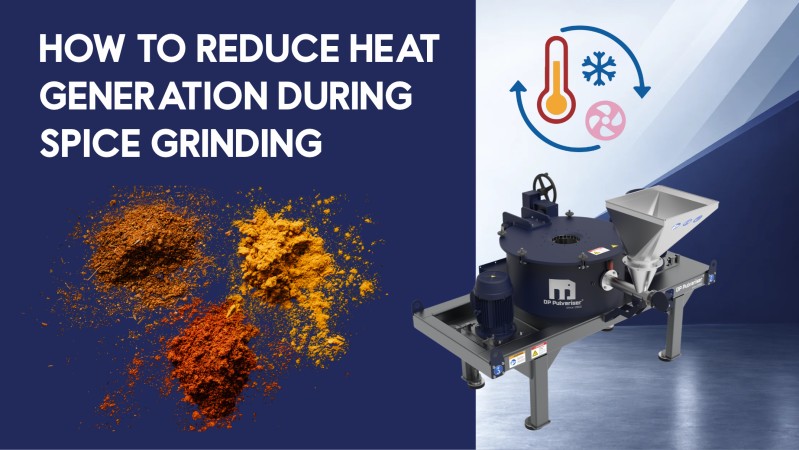
Spices are valued for their natural colour, aroma, flavour, and distinctive volatile compounds During industrial grinding, however, friction, impact, and mechanical energy can increase the temperature of the material Excessive heat may affect sensitive flavour and aroma compounds, change product characteristics, and create challenges for maintaining consistent powder quality
For spice manufacturers processing turmeric, chilli, black pepper, coriander, cumin, and other ingredients, controlling heat generation is an important part of selecting and operating the right grinding system
So, how can manufacturers reduce heat during spice grinding without compromising production capacity or the required particle size?
The answer lies in understanding the material, choosing a suitable grinding technology, optimising operating conditions, and evaluating the complete powder processing system
1 Why Does Heat Develop During Spice Grinding?
Heat generation is a natural consequence of mechanical size reduction As spices pass through a grinding machine, several mechanisms can contribute to a rise in temperature
Friction between grinding components Contact between material particles and grinding surfaces can generate heat, depending on the machine design and operating conditions
High-speed impact Grinding technologies that rely on high-speed impact transfer energy to the material to reduce its size Some of this energy is converted into heat
Prolonged grinding When material remains in the grinding zone longer than necessary, additional energy may be transferred to the product
High feed rates or unsuitable feeding conditions Inconsistent feeding can affect grinding efficiency, airflow, and the temperature profile inside the machine
Material characteristics Moisture content, oil content, hardness, fibrous structure, and initial temperature can influence how a spice behaves during grinding
Understanding these factors helps manufacturers identify the most appropriate ways to manage temperature during processing
2 Select the Right Grinding Machine for the Spice
Different spices have different physical properties, so a single grinding technology may not be ideal for every application
Pin Mill
A Pin Mill uses high-speed rotating and stationary pins to reduce material size through impact Depending on the spice, target fineness, and operating conditions, it can be suitable for processing selected spices and food ingredients
Appropriate machine selection and operating parameters are important when temperature-sensitive products are involved
Contra Pin Mill
A Contra Pin Mill uses counter-rotating pin discs to create high relative impact speeds It can be evaluated for selected materials that require fine grinding, including certain oily or heat-sensitive products
Its suitability depends on the specific spice, the required particle size, the throughput target, and the temperature limits of the application High-speed grinding does not automatically guarantee lower product temperatures
Air Classifier Mill ACM
An Air Classifier Mill combines grinding and particle classification It may be appropriate for spice applications requiring fine powder and controlled particle size distribution
The grinding mechanism, airflow, feed rate, and classifier settings should be evaluated together to establish the desired balance between fineness, capacity, and temperature
The key principle Choose a grinding technology based on actual material behaviour and processing requirements rather than machine speed or fineness specifications alone
3 Optimise Grinding Speed and Operating Parameters
Machine operating conditions can significantly influence heat generation
Higher operating speeds may increase the energy transferred to the material, although the actual temperature response depends on the grinding mechanism and machine configuration
Manufacturers should evaluate
Rotor or pin-disc speed, where adjustable
Feed rate and consistency of material feeding
Required final particle size
Airflow and heat removal, where applicable
Grinding component condition and clearances
Product temperature at the inlet and outlet
The objective is to identify operating conditions that achieve the required fineness and throughput without unnecessary energy input
Operating parameters should always remain within the equipment manufacturer's recommended limits
4 Manage Airflow and Heat Removal
In suitable grinding systems, airflow can help transport particles through the grinding zone and carry away some of the heat generated during processing
However, airflow requirements depend on the machine design, material properties, and process configuration
An effective evaluation should consider
Airflow through the grinding system Appropriate airflow may support material transport and heat management
Air temperature The temperature of the incoming air can influence the overall thermal conditions inside the system
Product residence time Efficient material movement may help reduce unnecessary exposure to the grinding zone
Dust collection and separation Cyclones, classifiers, and dust collectors should be correctly selected and integrated to support stable operation
Simply increasing airflow is not always the right solution The complete system should be assessed to avoid compromising separation efficiency, product recovery, or particle size performance
5 Control the Initial Condition of the Spices
The condition of the raw material before grinding can influence processing behaviour
Moisture content, storage conditions, initial temperature, and material consistency should be assessed before production
For example, a spice with excessive moisture may behave differently from a properly conditioned, dry material Oil-rich spices may also create additional challenges related to sticking, agglomeration, and heat sensitivity
A practical approach includes
Maintaining consistent raw material quality
Monitoring moisture content where relevant
Avoiding unnecessarily warm feed material
Using suitable storage and handling practices
Establishing appropriate feed preparation requirements
Pre-cooling may be considered for selected applications, but it should be evaluated against energy consumption, condensation risk, moisture control, and production requirements
6 Consider Cryogenic Grinding for Highly Heat-Sensitive Materials
For certain spices and other temperature-sensitive materials, cryogenic grinding may be worth evaluating
This process uses a cryogenic medium, commonly liquid nitrogen, to cool the material before or during size reduction Lower material temperatures can make some products more suitable for grinding and may help reduce heat-related quality changes
Potential advantages, depending on the application, include
Improved grindability of certain materials
Reduced thermal exposure during processing
Better handling of some oily or sticky products
Potential improvements in powder flow and particle size reduction
However, cryogenic grinding requires additional equipment, operating controls, and cryogen consumption It may not be necessary or economical for every spice application
The decision should be based on material trials, target particle size, throughput, product quality requirements, and overall operating costs
7 Monitor Product Temperature During Grinding
Temperature monitoring helps manufacturers understand how a grinding process performs under actual operating conditions
Rather than relying on machine settings alone, temperature should be evaluated at relevant points in the process
Consider monitoring
Initial raw material temperature
Product temperature immediately after grinding
Temperature variation during continuous production
Changes in aroma, colour, flow characteristics, or other relevant quality parameters
Performance at different feed rates and particle size targets
A defined temperature limit should be established according to the spice, product specification, and quality requirements There is no single temperature threshold that applies to every spice
Comparing trial results under consistent conditions can help determine whether a proposed grinding system meets the required product quality and production targets
8 Evaluate the Complete Grinding and Collection System
The mill is only one part of an industrial spice processing line Feeding, conveying, classification, collection, and cleaning can all affect process stability and finished powder quality
Depending on the application, a system may include
Raw material feeding equipment
A suitable spice grinding mill
Air classification, where required
Cyclone separation
Pulse Jet Dust Collector
Pneumatic conveying and product collection
For food applications, manufacturers should also assess product-contact material selection, cleanability, contamination prevention, and the relevant hygiene requirements
An integrated system designed around the actual material and production target can help improve consistency and reduce avoidable processing problems
9 Why Material Trials Matter Before Selecting a Spice Grinding Machine
Theoretical specifications alone cannot reliably predict the temperature profile or finished powder quality of every spice
Material trials allow manufacturers to evaluate the proposed grinding technology using the actual raw material
A properly planned trial can help establish
Achievable particle size and particle size distribution
Production capacity at the required fineness
Product temperature under defined operating conditions
Powder flow and collection behaviour
Suitability of the grinding mechanism
Whether conventional or cryogenic processing should be considered
At DP Pulveriser's Gandhinagar unit, application trials and testing can help customers assess potential grinding solutions for their materials and processing requirements
Testing should use clearly defined acceptance criteria so that machine selection is based on measurable results rather than assumptions
Conclusion
Reducing heat generation during spice grinding requires more than simply lowering machine speed The right approach combines suitable grinding technology, controlled operating conditions, effective heat management, consistent raw material preparation, and temperature monitoring
For turmeric, chilli, coriander, cumin, and other spices, the ideal solution depends on the material's properties, the required particle size, production capacity, and finished product quality requirements
DP Pulveriser provides powder processing solutions for a range of industrial applications Evaluating the actual spice through application trials can help identify a suitable grinding technology and establish practical operating conditions
Looking for a suitable grinding machine for your spice processing application?
Contact DP Pulveriser to discuss your material, required fineness, production capacity, and temperature control requirements
Email sales@dppulverisercom
Phone +91 6351451704